Jan. 2/3 – San Quintin to La Paz
“¡Pinche gringo loco!”
Maybe they were right. Fifteen minutes earlier, when I’d plopped myself down next to the four Mexican men on the stoop outside of the near-deserted roadside stop off the Baja highway, they had looked at me in disbelief. What was I doing, and how did I wind up here?
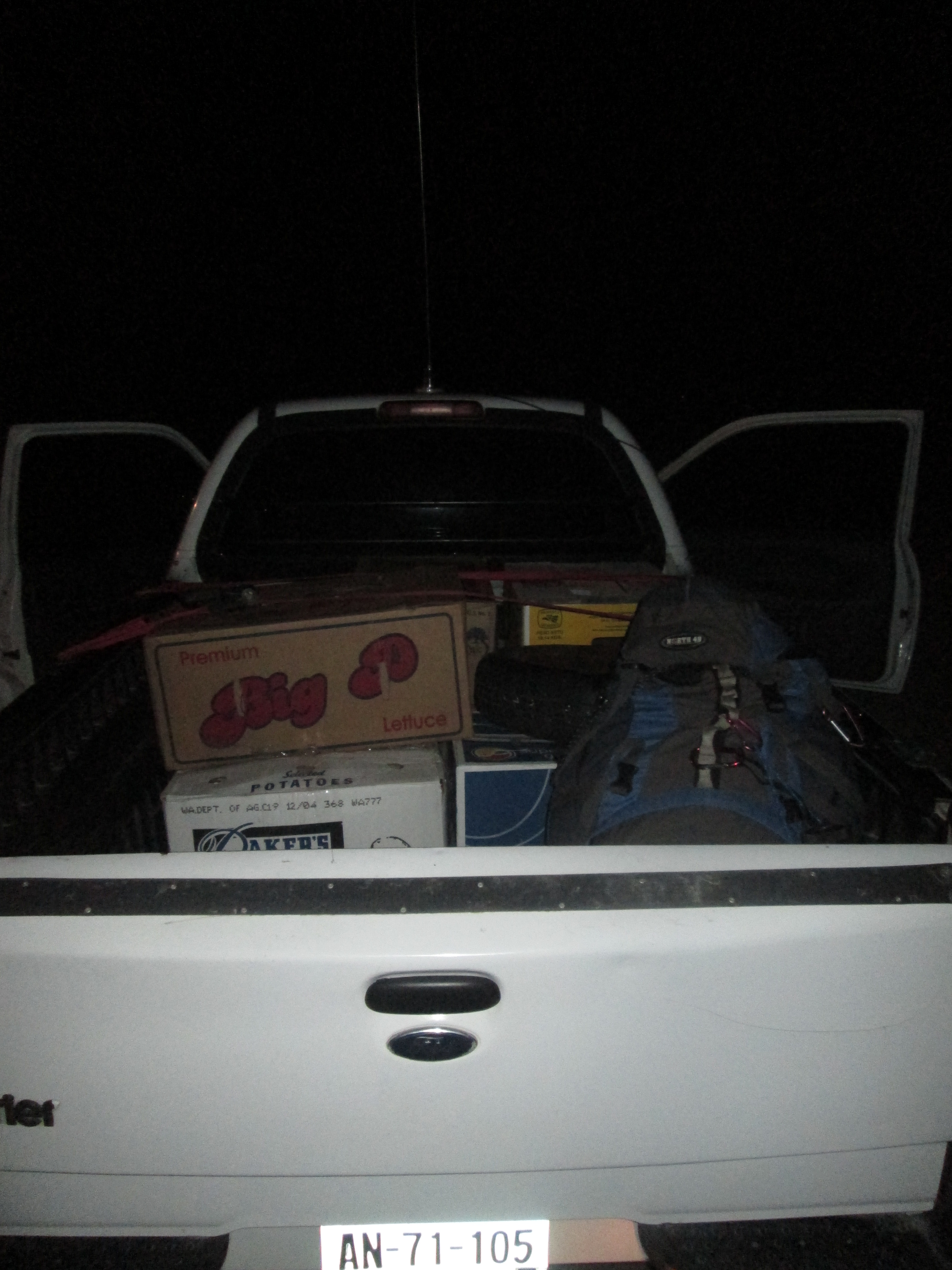
But now, as I squeezed myself between the pile of tortilla boxes in the back of Bernardo’s pickup truck and prepared to take off into the Baja night, they were laughing in delight.
“¡Buena suerte, pinche gringo loco!”
I’ll start with the obvious: in winter, daylight is precious. That rule applies tenfold while thumbing it. Under darkness, there’s no chance of finding a lift roadside. Gas stations are an option, but traffic is lighter, travel conditions are more dangerous, and there’s less hope of finding your destination safely.
Before reaching Mexico, I had resolved not to travel by night. Based on what people told me, it wasn’t that sensible. But, at about 7:30 p.m., stuck in the desert about 130 kilometres north of Guerrero Negro, I changed tack: I figured drivers would be kinder to me than whatever was slithering around the chilly desert ground.
It had already been a long day. About nine hours earlier, Trino and Karol had dumped me a few miles south of San Quintin. It had taken an hour the secure my first ride. Then, after catching a lift with Anastasio down the road to Rosario, I’d spent too much time drinking coffee at his house.
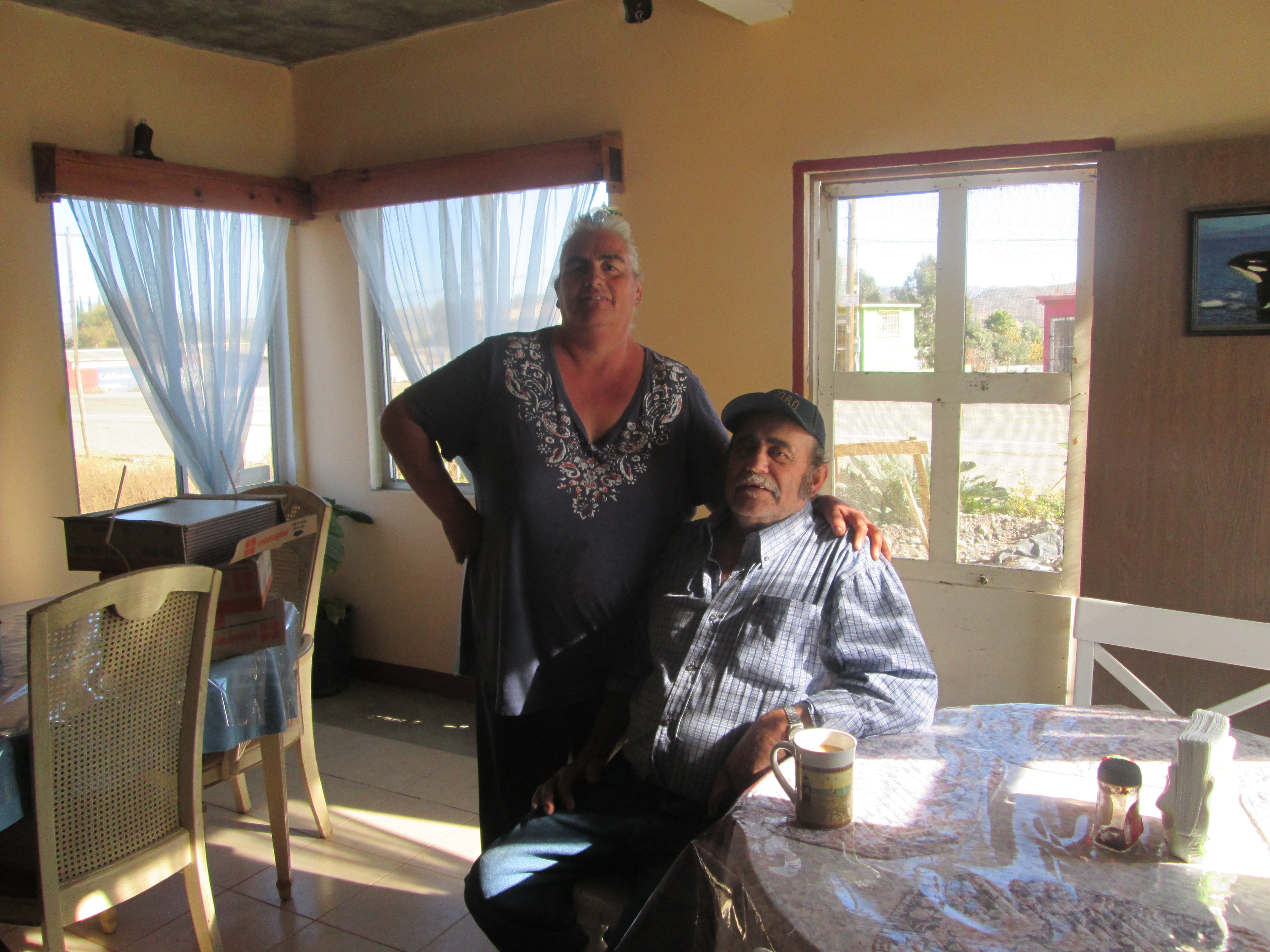
The sun was already dipping before I found a new ride south with Hernancio. But after a late string of short lifts, I wanted to keep the momentum going.
So when Bernardo and Josue pulled up in their beat-up Ford pickup to drop off the night’s round of tortillas, my new acquaintances helped me secure a spot in the back. As per usual in this country, the duo was quick to help out. For the next 90 minutes, I leaned back against those tortilla boxes and stared up at the stars.
We’d stop every 15 minutes or so to drop off a new set of tortillas at a different roadside shop before continuing southwards. Most folks were bemused by the random white guy delivering tortillas in rural Baja. But there were no problems. When a police car pulled up beside me, the officers asked if I was comfortable. At a military checkpoint along the highway (there are routine inspection stops for drugs and migrants), the soldiers gave me a nod and waved me through.
When Bernardo dumped me at a PEMEX about 40 kilometres north of Guerrero Negro, he hollered over to one of the attendants. I quickly had some amigos. I pulled up a chair beside Leonardo and Rafael, hoping to catch one more lift before bedtime.
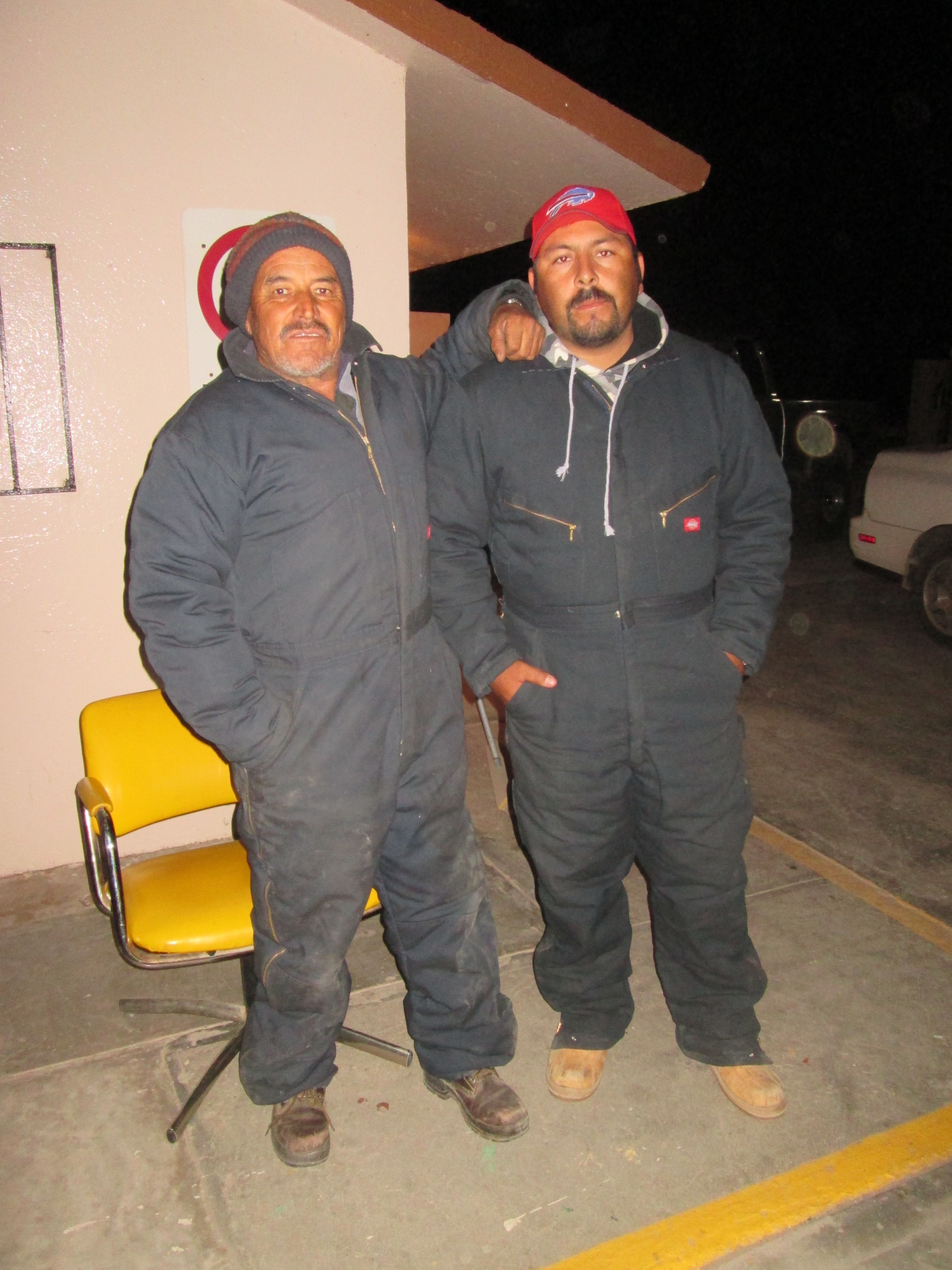
They were good company, happy to chat with me about their country and eager to help find me a ride. But with about one southbound car every 10 minutes, and few going any great distance, I figured I’d be stuck for the night. I quit looking around midnight. Since it was cold, the duo kindly let me shack up inside. With their shift ending at 4 a.m., we said our goodbyes.
Bu I’d barely gotten into my sleeping back when Leonardo burst into the room with a grin: there was a driver at the pumps heading all the way to La Paz. I quickly packed up my bag, gave
Leonardo and Rafael some hugs, and jumped into the car.
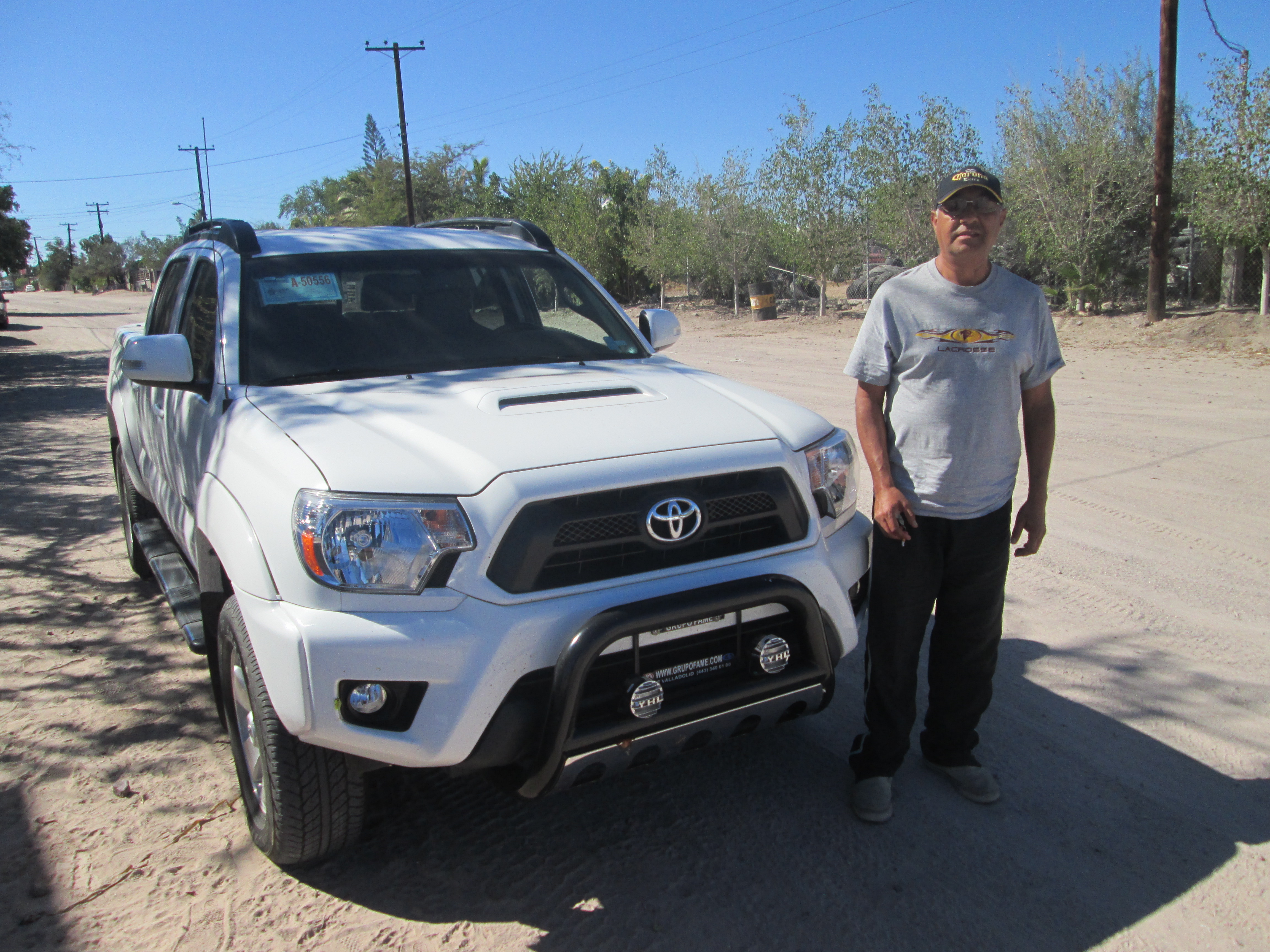
Eduardo was in the middle of a massive trip from Tijuana to La Paz: a 1,400-km straight shot. As a long-haul vehicle delivery man, this was one of his usual routes. What luck! After eleven hours of chatting and dozing (mostly dozing), we parted ways in the searing La Paz heat.
I’d travelled 1,222 km in 24 hours. I needed some rest.
 Gilbert Coyle